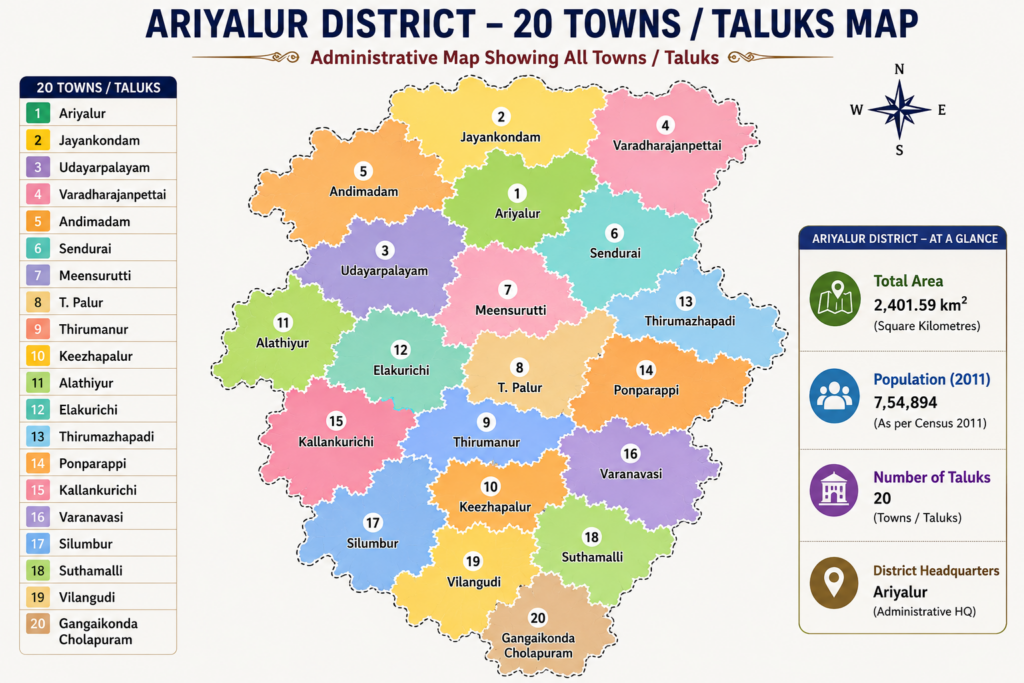
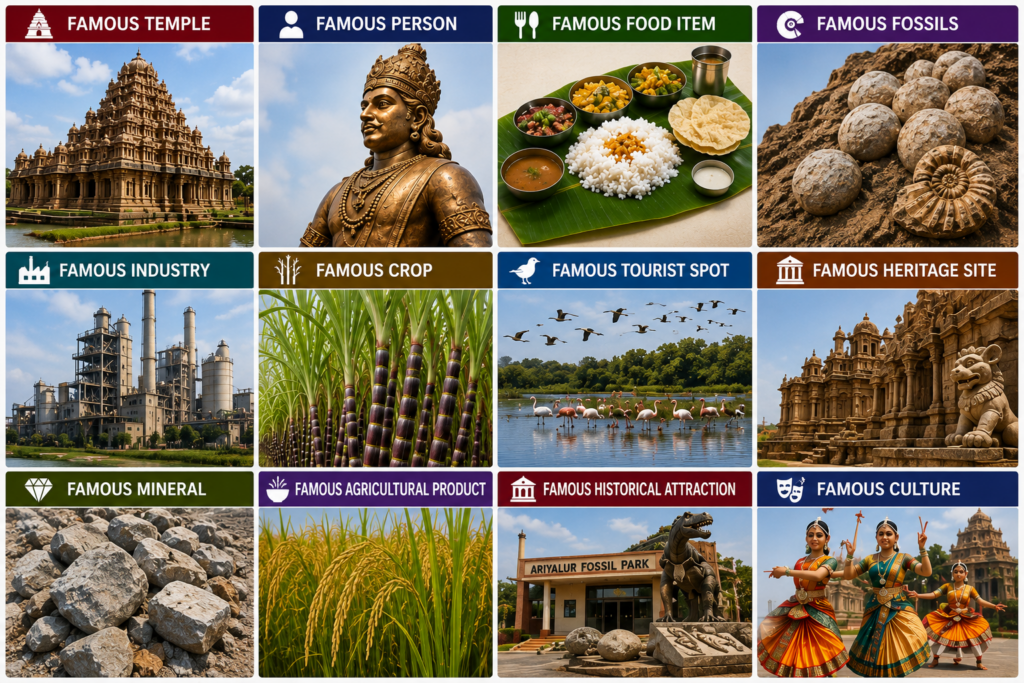




Ariyalur District is an important district located in the central part of Tamil Nadu. The district headquarters is Ariyalur town, which serves as the administrative center of the region. Covering an area of approximately 1,940 square kilometers, Ariyalur is known for its rich cultural heritage and historical significance. The district is home to several towns and villages, including Jayankondam, Udayarpalayam, Andimadam, Sendurai, and Gangaikonda Cholapuram. Agriculture remains the primary occupation of the people, with paddy, sugarcane, maize, and pulses being major crops. Ariyalur is also famous for its abundant limestone reserves, supporting a thriving cement industry. The district has gained national recognition for its fossil discoveries, including dinosaur eggs and ancient marine fossils. Tamil is the primary language spoken throughout the district.
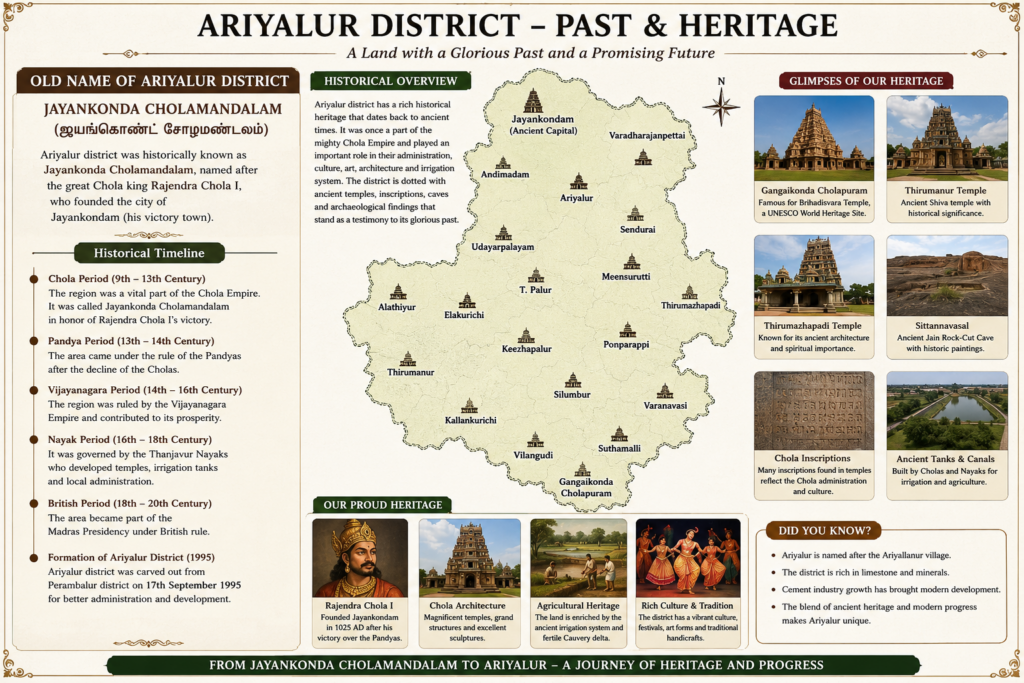
Ariyalur District has a rich history linked to the mighty Chola Empire. The region was historically known as Jayankonda Cholamandalam and gained importance during the reign of Rajendra Chola I. The famous Gangaikonda Cholapuram, once the Chola capital, remains a major historical landmark. The district is known for its ancient temples, inscriptions, and fossil discoveries. Over the centuries, it was ruled by the Pandyas, Vijayanagara Empire, Nayaks, and the British. Rich in agriculture and limestone resources, Ariyalur became a separate district on 17 September 1995. Today, it is recognized for its heritage, culture, cement industries, and historical significance. The district also attracts visitors with its archaeological sites and UNESCO-recognized monuments. Ariyalur continues to preserve its glorious past while contributing to the economic and cultural growth of Tamil Nadu.
Tamil, English
₹4,500+ Crore
8,75,753
1,940 Sq. Km.
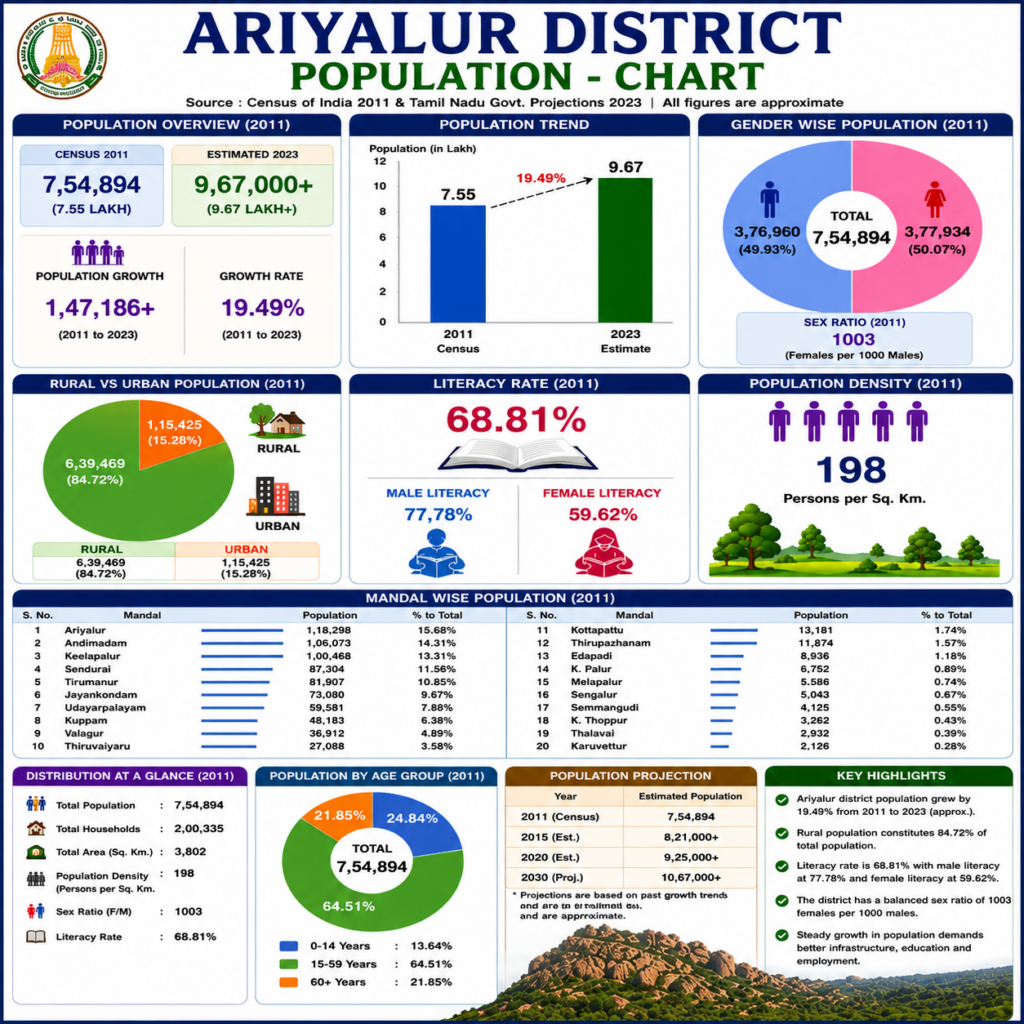
Ariyalur District is an important district in Tamil Nadu, known for its rich history, agricultural strength, and valuable mineral resources. According to the 2011 Census, the district had a population of approximately 7.55 lakh people, and recent estimates indicate steady growth over the years. Improvements in education, healthcare, transportation, and infrastructure have contributed significantly to the district’s social and economic development. The district continues to attract attention for its balanced growth and improving quality of life.The majority of Ariyalur’s population lives in rural areas and depends on agriculture and allied activities for their livelihood. Crops such as paddy, sugarcane, maize, and pulses play a major role in the local economy. The district has also made progress in literacy, employment opportunities, and public services, helping improve living standards across communities. With ongoing development initiatives and a growing population, Ariyalur is steadily moving toward a prosperous and sustainable future while preserving its cultural and historical heritage.
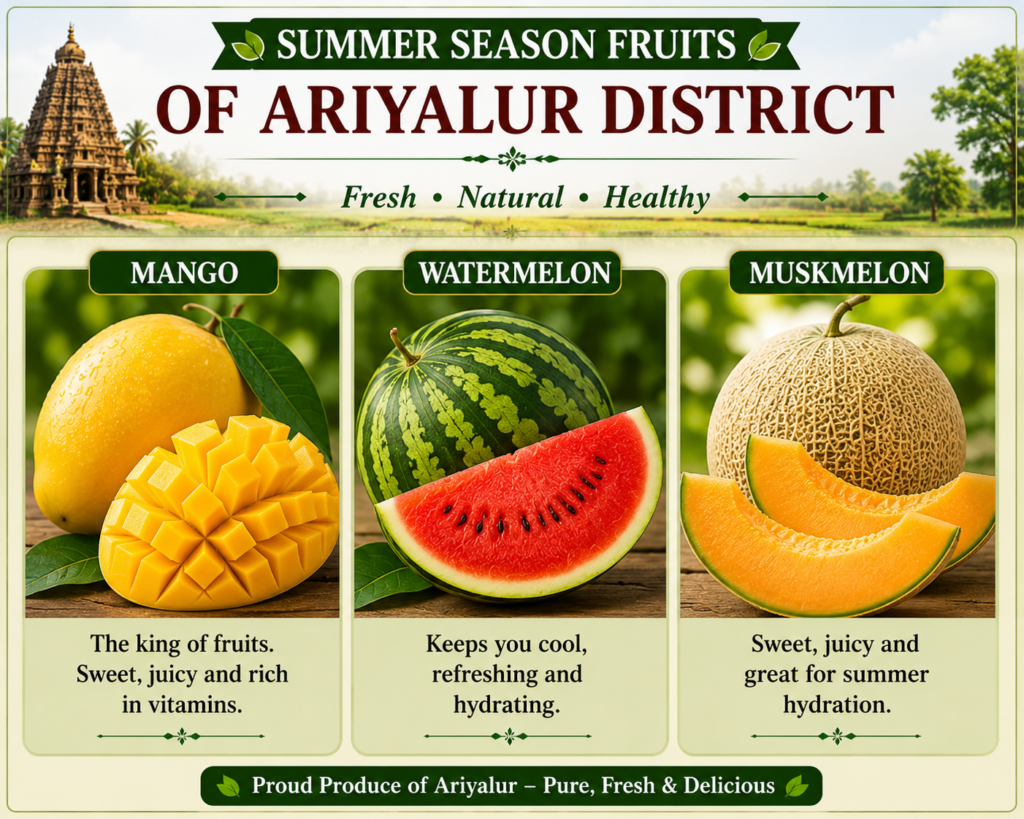
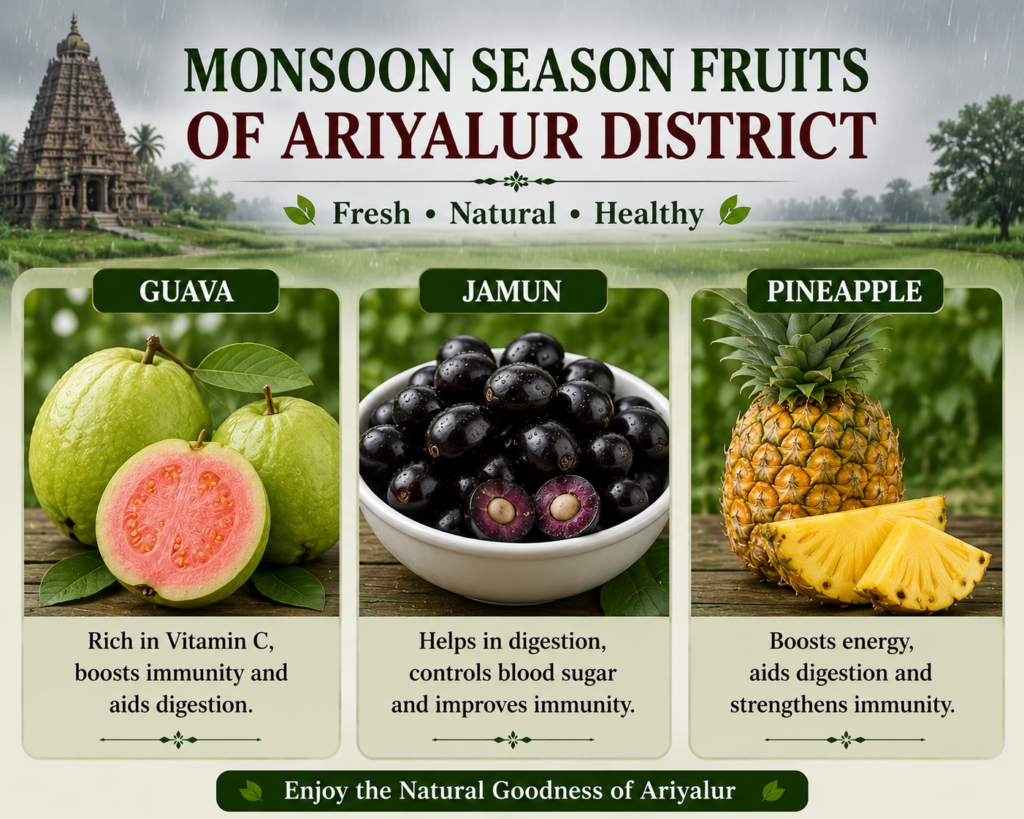
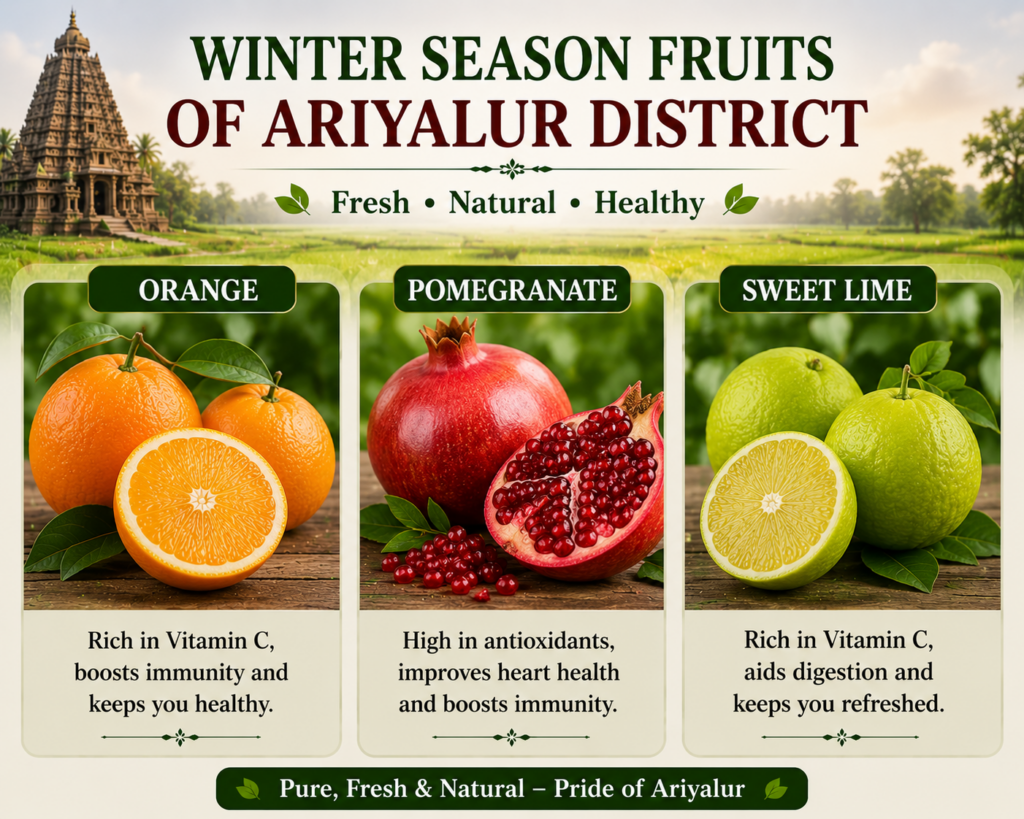
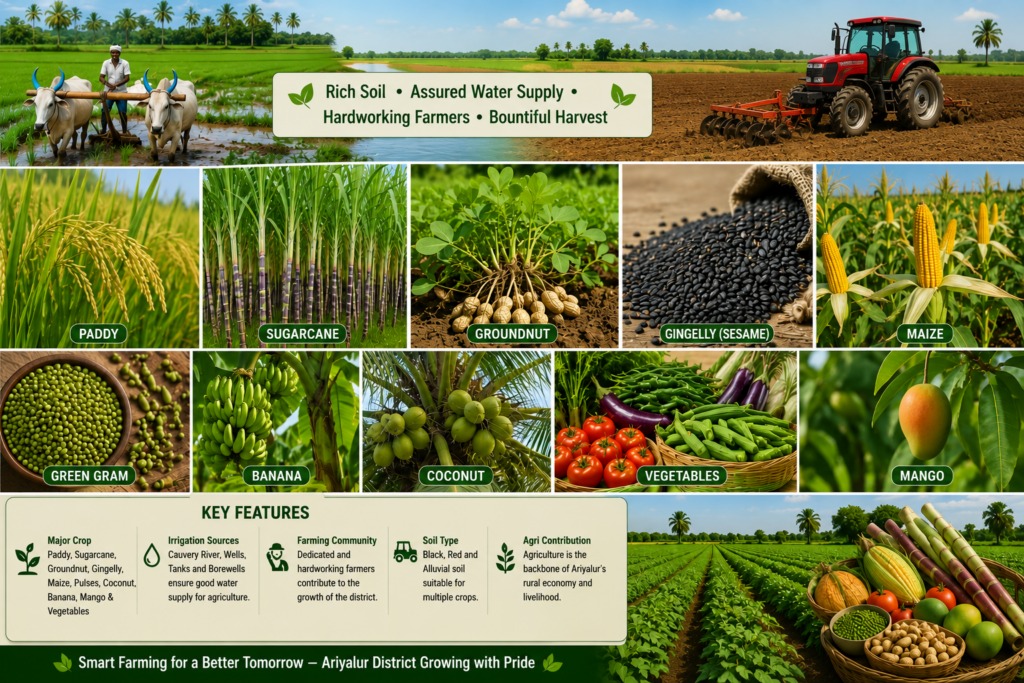
Ariyalur District is known for its fertile agricultural land and diverse farming activities. Agriculture is one of the primary occupations, supporting the livelihoods of thousands of farming families. Major crops cultivated in the district include paddy, sugarcane, groundnut, sesame, maize, pulses, and vegetables. Coconut, banana, and mango are also widely grown in suitable areas. Irrigation is supported by the Cauvery River, tanks, wells, and borewells, ensuring a reliable water supply for cultivation. Farmers increasingly adopt modern agricultural techniques and sustainable farming practices to improve productivity. The district’s favorable climate and fertile soil contribute to healthy crop yields throughout the year. Agriculture remains a key pillar of Ariyalur’s economy, driving rural development and ensuring food security. rich soil assured with water supply hardworking formers.
